Others

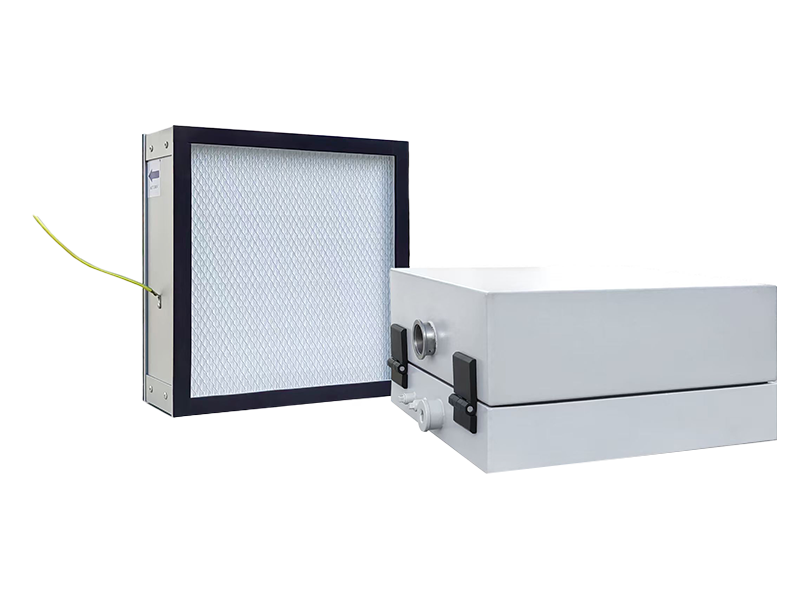
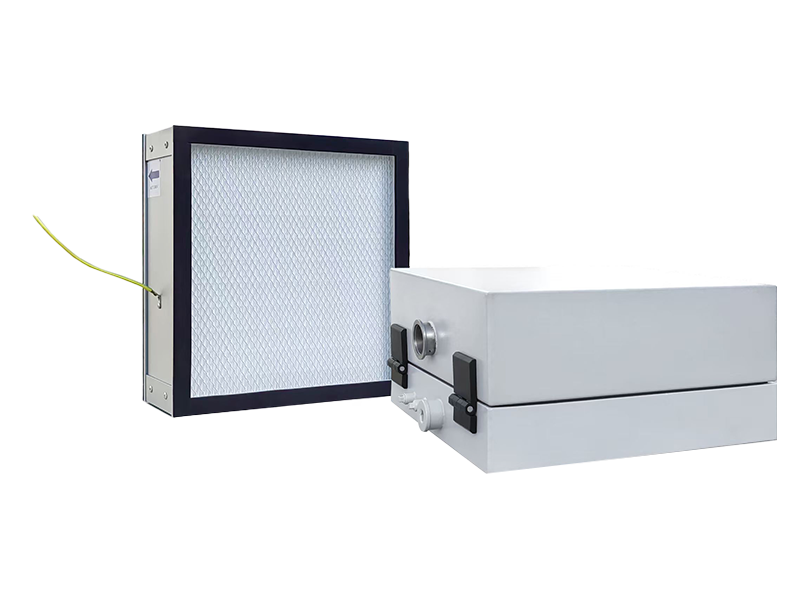
Exhaust Gas Filter

Filter Manufacturer Safe & Reliable Long Lasting & Stable Customizable
Exhaust gas filters are installed at the end of the exhaust pipeline of metal 3D printing equipment to treat dust-laden waste gas discharged from the build chamber during printing. Metal 3D printers need to purge the chamber before opening the door to vent internal dust-containing gas; some equipment also generates continuous tiny exhaust flows during printing. Such waste gas contains submicron metal fumes. Direct discharge will contaminate the workshop environment and pose health hazards to ope

Factory Direct Supply

Complete Certifications

Free Technical Guidance

Comprehensive After-sales Service

132 2373 6050

Core Definition

Exhaust filters are installed at the terminal of exhaust pipelines of metal 3D printing equipment to treat dust-laden waste gas discharged from the build chamber during printing. Metal 3D printers require chamber purging before the door is opened to vent internal dust-bearing gas; some equipment also produces continuous low-volume exhaust during printing. Such waste gas contains submicron metal fumes. Direct discharge will contaminate the workshop environment and endanger operators’ health.

Complying with EN 1822 standard, the high-efficiency filter stage of exhaust filters achieves ≥99.95% filtration efficiency for 0.3μm particles (H13), ensuring the treated gas can be discharged indoors directly without external exhaust ducts. This product is widely adopted by 3D printing service providers, R&D laboratories, universities and other sites without centralized exhaust systems.

Core Technical Advantages

Plug-and-play independent operation: As standalone units, exhaust filters only need power supply and exhaust pipe connection to operate. No renovation of workshop exhaust systems is required, making them ideal for sites without centralized ventilation. Equipped with moving casters for flexible relocation beside different printers.

Multi-stage filtration for compliant emission: Three-stage filtration structure (primary filter + medium filter + HEPA). The primary filter traps large particles ≥5μm, the medium filter captures particles ≥1μm, and H13 HEPA removes ≥0.3μm particles with efficiency ≥99.95%. Outlet particulate concentration ≤1mg/m³, far exceeding the requirements of GB 16297-1996, allowing direct indoor discharge.

Safety-oriented design: Flame-retardant filter media are adopted, and the housing is grounded for static dissipation. Spark arrestors are optional to prevent fire hazards caused by sparks carried in equipment exhaust entering the filter.

Application Fields

Centralized exhaust treatment for single or multiple metal 3D printers

Purification of purging exhaust from metal 3D printing build chambers

Laser welding fume treatment

Exhaust purification for powder handling equipment

Exhaust treatment for laboratory chemical fume hoods

Fume control for small welding workshops

Case & Data Verification

A School of Materials Science at a university operates two small SLM printers in a lab without a centralized exhaust system. Fumes released during printing caused poor indoor air quality and distinct metallic odor. After deploying two compact exhaust filters, indoor PM2.5 concentration dropped from 180μg/m³ to below 35μg/m³, and metallic odors were completely eliminated.

FAQ

Q1: Can exhaust filters fully replace centralized exhaust systems?
A: For a single printer or a small number of units, exhaust filters can fully replace centralized ventilation systems, with treated gas safe for indoor direct discharge. For workshops with more than 5 printers or large-scale production facilities, a combined solution of centralized exhaust system plus terminal exhaust filters is recommended.

Q2: Can exhaust filters handle high-temperature exhaust from EBM equipment?
A: Standard exhaust filters support operating temperatures up to 80°C. EBM equipment exhaust reaches 150–200°C, so high-temperature versions with heat-resistant filter media and metal sealing components are required. Specify exhaust temperature when placing orders.

Q3: Does the exhaust filter require regular maintenance?
A: Yes. It is recommended to check differential pressure readings monthly, clean accumulated dust on fan impellers and inner housing every quarter, and calibrate the differential pressure sensor annually.

Related Recommendations
首页 电话 TOP