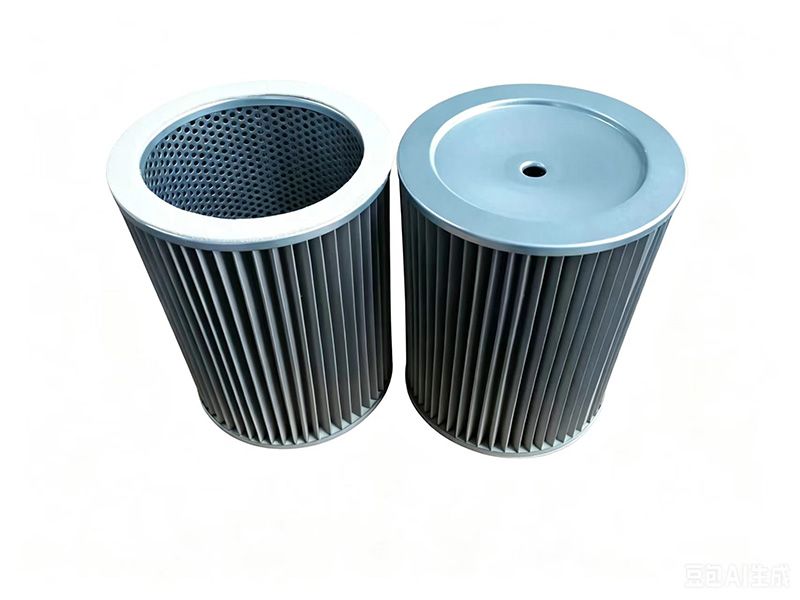
Description:
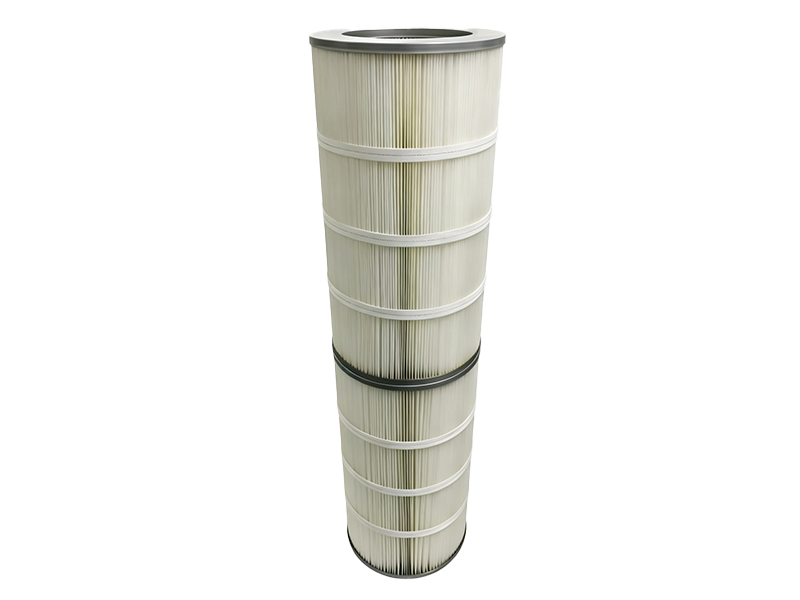
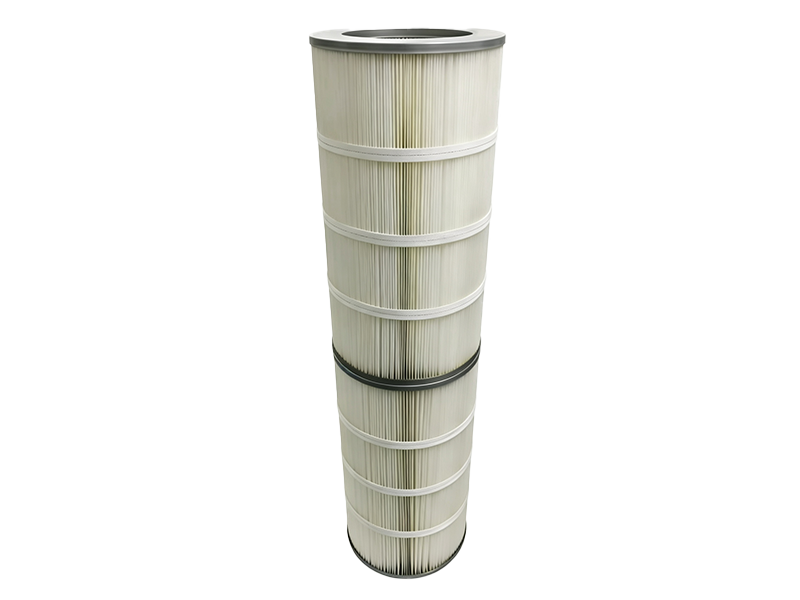
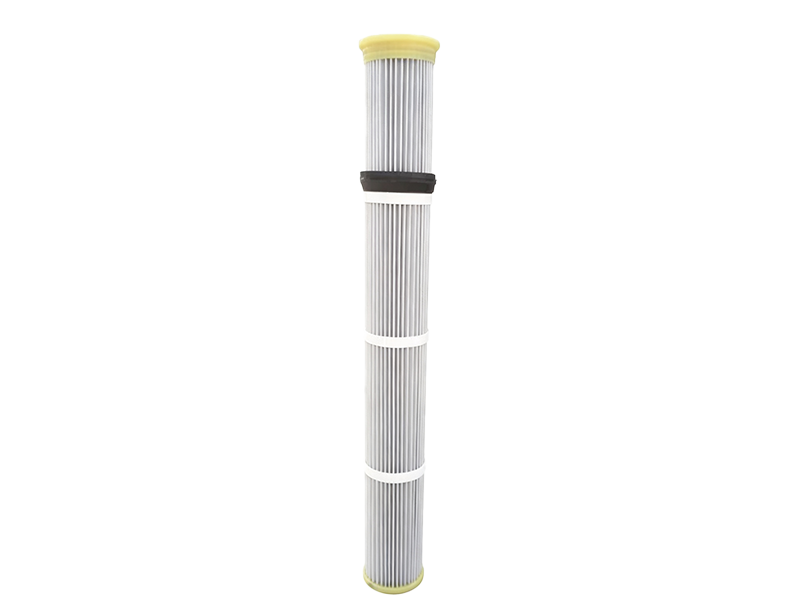
Laser cutting dust filter cartridges are installed in pulse backblow dust collectors to capture metallic dust, fume and fine particulate matter generated during laser cutting. Under high temperature, the base material vaporizes and produces massive micron and even submicron metallic oxide fume. Such fume not only endangers operators’ health, but also adheres to optical lenses to degrade cutting quality and even trigger equipment failures.
Core Technical Advantages:
High-efficiency filtration for compliant emissions: Adopting PTFE membrane coated polyester filter media with uniform surface microporous structure and pore size of 0.1–0.5μm, it achieves ≥99.99% filtration efficiency against submicron fume particles.
Pleated design for large filtration area: High-density pleated structure with 200–220 folds delivers 7.5–11㎡ filtration area per cartridge, 3–6 times that of traditional filter bags. It greatly reduces filter velocity and operating resistance under the same airflow volume.
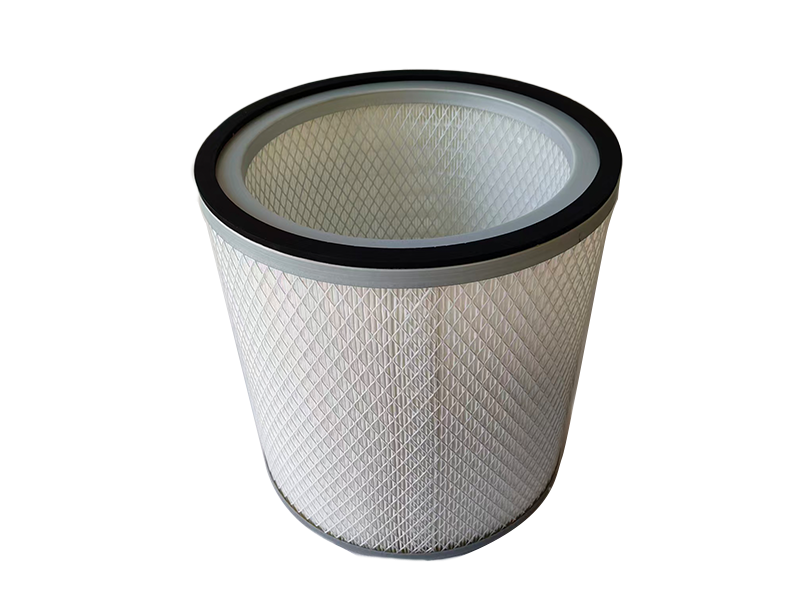
High-strength structure resistant to pulse impact: The inner support frame adopts galvanized diamond mesh or stainless steel with high opening rate and strong supporting rigidity. It remains undeformed under repeated impact of high-pressure pulse gas thousands of times per day.
Working Condition Matching Table:
| Cutting Material | Laser Power | Fume Characteristics | Recommended Precision | Special Requirements |
| Thin Carbon Steel Plate (≤6mm) | ≤2kW | Metallic oxide dust, particle size 0.5–5μm | 0.5–1μm | PTFE membrane coated, moisture resistant |
| Medium & Thick Carbon Steel Plate (6–20mm) | 2–6kW | High-concentration fume with sparks | 0.3–0.5μm | Flame retardant treatment |
| Stainless Steel Cutting | 1–4kW | Toxic fume containing chromium & nickel oxides | 0.3μm | Anti-static + high precision |
| Aluminum Alloy Cutting | 2–6kW | Highly reflective, explosive dust | 0.3μm | Flame retardant + anti-static |
| Copper / Brass Cutting | 2–4kW | Fast heat conduction, fine fume | 0.3–0.5μm | High precision filtration |
| Galvanized Sheet Cutting | 1–3kW | Zinc-containing fume (from welding heat) | 0.3μm | Anti-static |
| Plastic / Acrylic Cutting | 0.5–2kW | Organic fume & oil mist | 0.5–1μm | Temperature resistant + anti-adhesion |
Note: Parameter values refer to GB/T 5445-2014 and EN 60335-2-69 standards
Application Fields:
Dust removal systems for laser cutting equipment in metal processing
Fume collection for laser welding in metal processing
Fume purification for plasma cutting in metal processing
Dust collection for laser marking & laser engraving
Centralized dust removal for CNC laser cutting centers
Supporting dust removal for handheld laser welders
Dust removal for laser marking of precision parts
Case & Data Verification:
For a sheet metal processing enterprise, all original standard polyester filter cartridges were replaced with PTFE membrane coated ones, together with optimized pulse cleaning parameters. The workshop fume concentration dropped from 4.5mg/m³ to 0.8mg/m³, far below national standard limits; the cleaning frequency of optical lenses was reduced from 3 times per week to once per month; the cartridge replacement cycle was extended from 6 months to 12 months.
FAQ:
Q1: How to judge when dust filter cartridges need replacement?
A: Judgement mainly relies on monitoring the pressure differential across the cartridge:
Initial pressure drop of clean cartridges is about 120–150Pa;
Activate pulse backblow cleaning when pressure differential reaches 1500–2500Pa;
Replace cartridges if pressure differential cannot fall back to within 1.5 times the initial value after cleaning, or replace periodically at fixed intervals (6–12 months).
Q2: What are the advantages of PTFE membrane cartridges over standard polyester cartridges?
A: The PTFE membrane forms a dense microporous filter layer to realize surface filtration instead of depth filtration, with obvious merits: dust cannot penetrate deep into media for thorough ash cleaning; higher filtration efficiency (99.99% vs 99%); hydrophobic and oleophobic property suitable for high-humidity or oily working conditions; longer service life (12–18 months vs 6–12 months).
Q3: Is higher pleat density always better for filter cartridges?
A: Not exactly. More folds enlarge filtration area within limited space, yet excessive folds lead to narrow gaps between pleats, causing dust bridging and blockage, and pulse airflow cannot reach deep inside folds. Cartridges usually adopt 200–220 folds with special technology to keep pleats open.