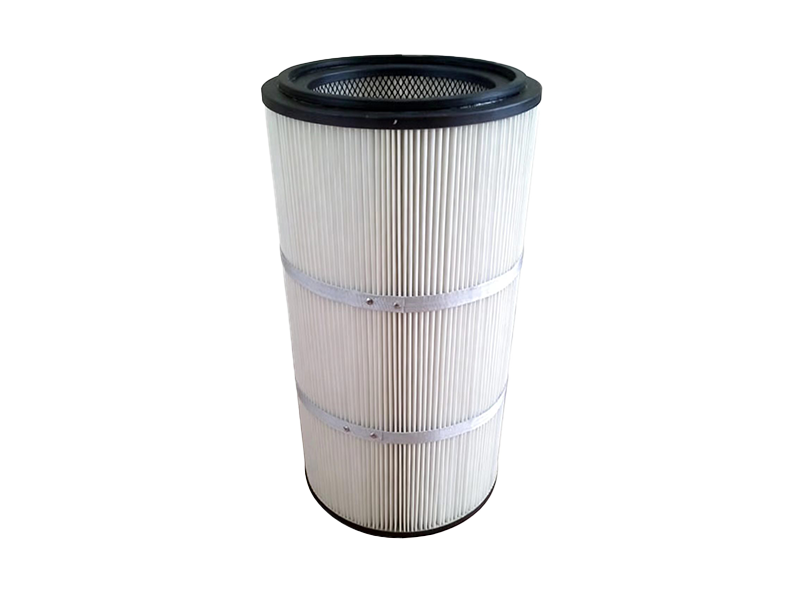
Description:
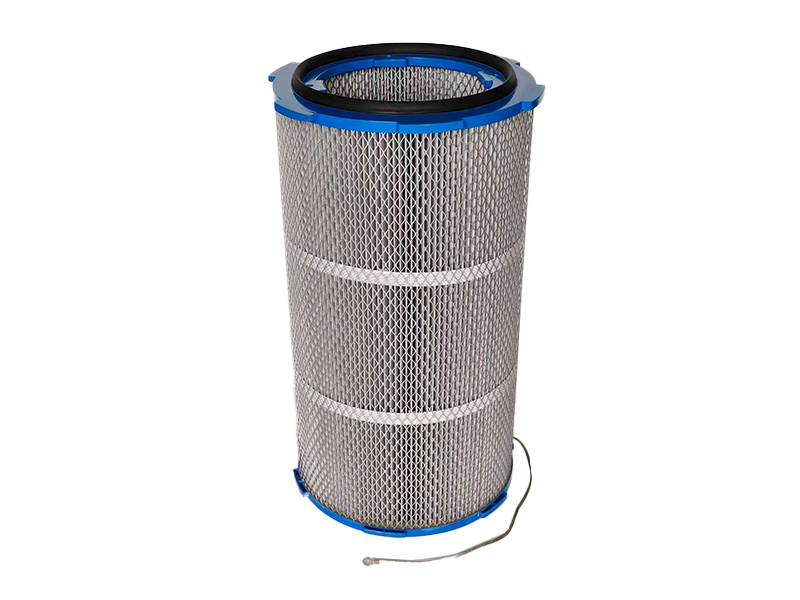
Anti-static filter cartridges are designed for filtration during welding of stainless steel, aluminum alloy, magnesium alloy and other materials that easily generate electrostatic sparks or explosive dust. During welding, friction between high-speed dust-laden airflow and filter media causes static charge accumulation. Once charges build up to a certain threshold, electrostatic discharge sparks will occur. If the dust is explosive (e.g., aluminum powder and magnesium powder with particle size<200μm have minimum ignition energy of only 1–20mJ), fire and explosion accidents are highly likely.
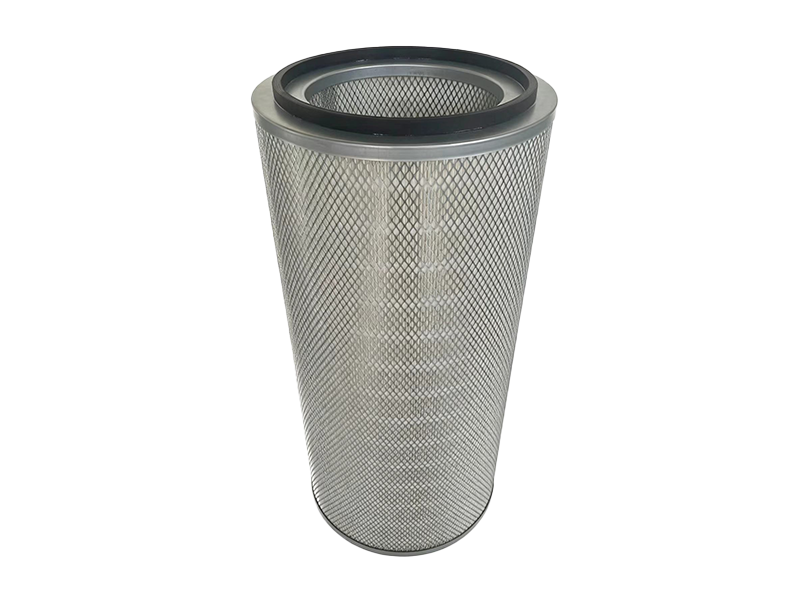
Anti-static filter cartridges embed conductive fiber mesh or adopt conductive coating on polyester fiber substrates to form continuous conductive paths. The surface resistance is controlled within the safe range of 10⁶–10⁹Ω (compliant with GB 15577-2018 dust explosion prevention standard), which quickly conducts static electricity to the grounding system and eliminates spark hazards. They are essential safety components for high-risk scenarios such as aluminum alloy welding in shipyards and automotive aluminum body welding.
Core Technical Advantages:
Static elimination technology to eliminate explosion risks: Conductive fiber mesh is embedded in filter media or nano conductive coating is applied, stabilizing surface resistance at ≤10⁹Ω (meeting ISO 8031 anti-explosion standard). Compared with standard filter cartridges (surface resistance >10¹²Ω), static discharge efficiency is improved by over 90%, effectively preventing combustion and explosion risks caused by charge accumulation.
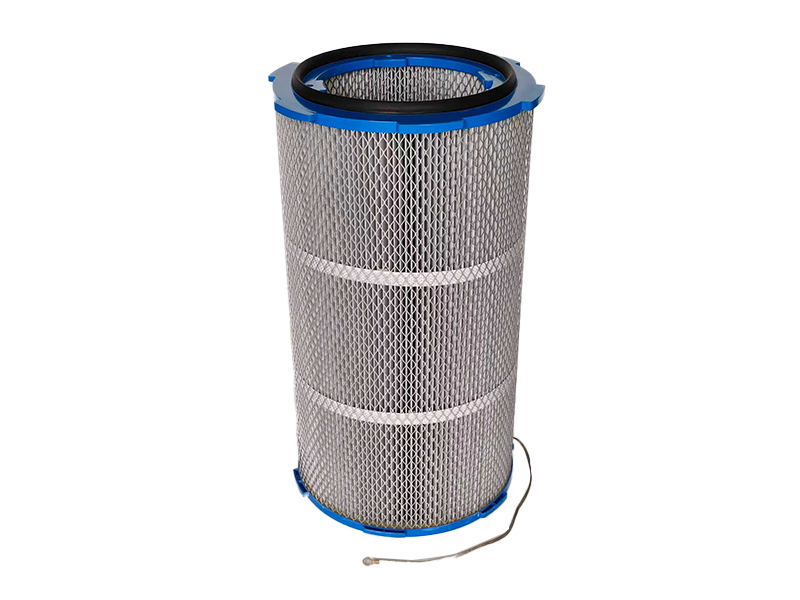
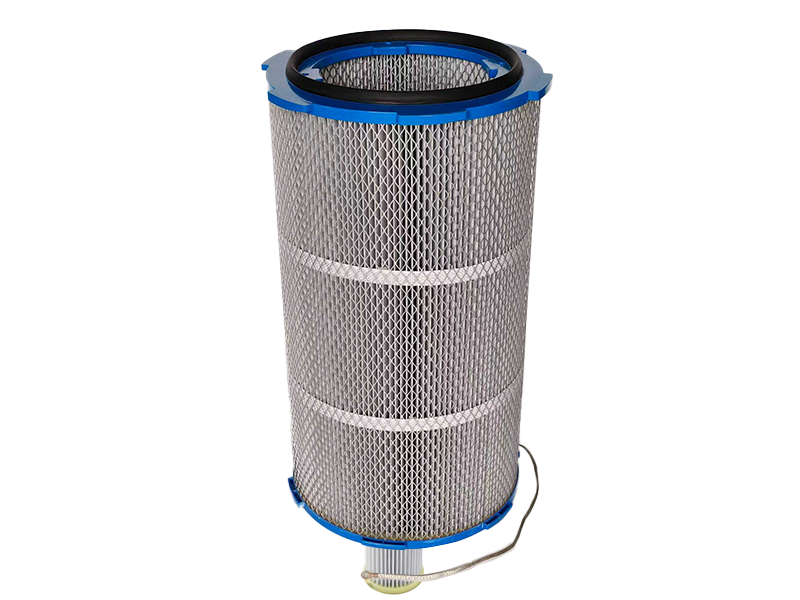
Dual protection structure: Besides conductive fibers, the metal support frame and end caps are made of conductive materials and reliably connected to the equipment grounding system, building a complete conductive path from filter media to machinery. Ground wire connectors are optional to guarantee reliable grounding after installation.
Uncompromised filtration efficiency: Anti-static treatment does not alter the micropore structure of filter media. It maintains 0.3–5μm filtration precision with ≥99.9% interception efficiency for welding fume particles. Optional PTFE membrane coating further upgrades filtration accuracy and ash cleaning performance.
Excellent corrosion and temperature resistance: Polyester substrate with anti-static coating delivers good acid & alkali resistance (pH 2~12), suitable for corrosive gas environments in chemical industries. It withstands continuous temperature up to 120℃ (150℃ for short-term exposure).
Working Condition Matching Table:
| Welding Material | Dust Characteristics | Explosion Risk Level | Recommended Surface Resistance | Special Requirements |
| Aluminum Alloy | Aluminum Powder (MIT ≤20mJ) | High | ≤10⁹Ω | Match with Explosion-proof Dust Collector |
| Magnesium Alloy | Magnesium Powder (Extremely Flammable) | Extremely High | ≤10⁶Ω | ATEX Certification, Dedicated Grounding |
| Stainless Steel | Cr & Ni Contained Fume | Low | ≤10⁹Ω | Anti-static + PTFE Membrane |
| Galvanized Sheet | Zinc Contained Fume | Medium | ≤10⁹Ω | Anti-static + Flame Retardant Treatment |
| Oily Carbon Steel | Oily Dust | Medium | ≤10⁹Ω | Anti-static + Membrane Coating |
Application Fields:
Welding of aluminum / magnesium alloys
Dust removal for chemical equipment welding & maintenance
Welding fume treatment for stainless steel in pharmaceutical workshops
Welding operations in explosive dust environments
Welding worksites with mandatory explosion-proof requirements
FAQ:
Q1: What is the safe surface resistance range for anti-static filter cartridges?
A: In accordance with GB 15577-2018 and ISO 8031 standards, the surface resistance of anti-static filter media shall be controlled between 10⁶–10⁹Ω:
Below 10⁶Ω: Excess conductivity, risk of electric leakage
10⁶–10⁹Ω: Ideal safe range
Above 10⁹Ω: High risk of static accumulation, not applicable for explosion-proof areas
Q2: Do anti-static filter cartridges require grounding?
A: Yes. The embedded conductive fiber mesh, metal frame and end caps must be reliably connected to the equipment grounding system to form an intact conductive loop. Using anti-static media without grounding will not work.
Q3: Will anti-static treatment reduce filtration efficiency?
A: No. Conductive fibers are added in tiny proportion (0.5–1%) inside polyester fibers without changing pore size distribution and filtration performance. Combined with PTFE membrane coating, it realizes both anti-static property and high-precision filtration (≥99.9%).
Q4: Is anti-static filter cartridge mandatory for aluminum alloy welding?
A: Yes. Aluminum powder generated during aluminum alloy welding is classified as explosive dust. Per GB 15577-2018 Safety Regulations for Dust Explosion Prevention, anti-static filter media must be adopted at worksites with explosive dust. Meanwhile, the dust collector itself shall comply with explosion-proof design (bursting panels, flame arresters, etc.).