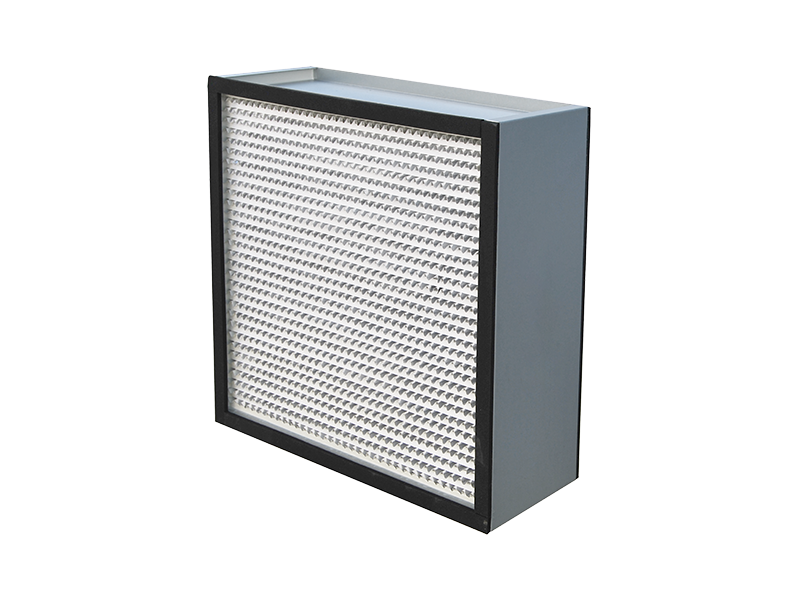
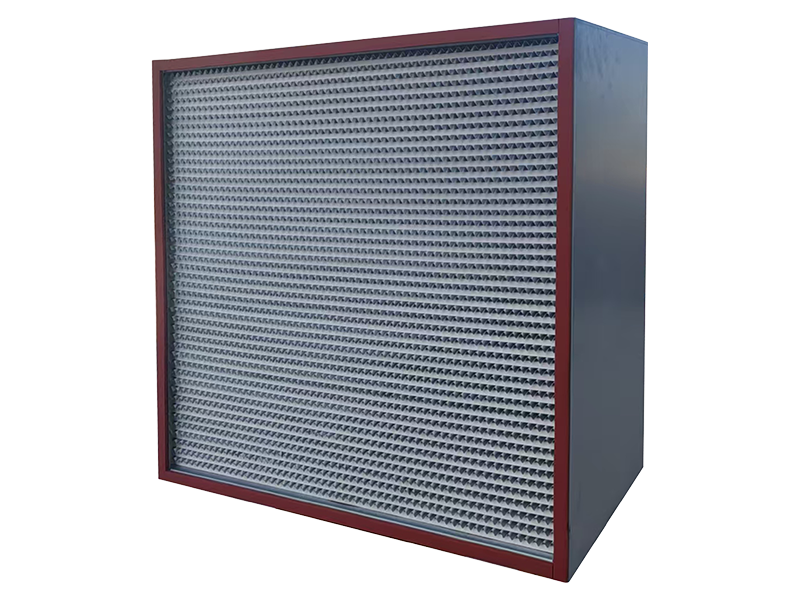
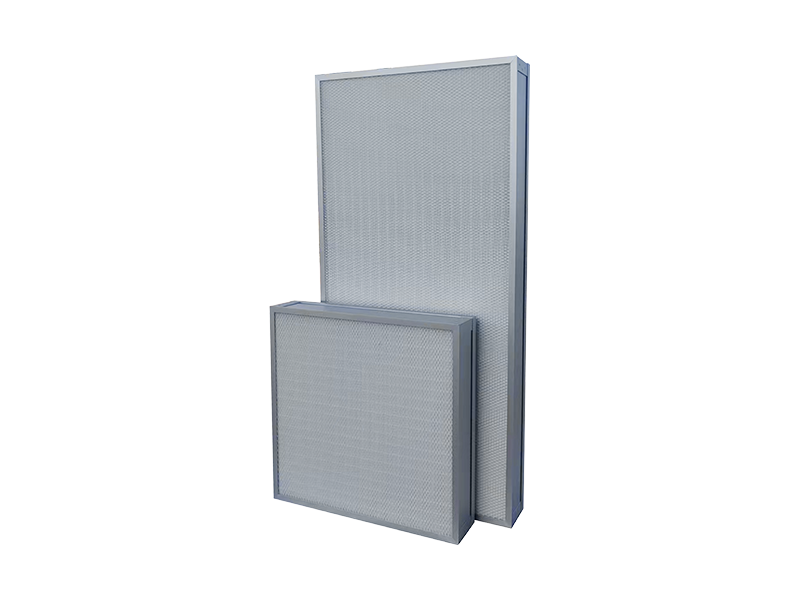
Description:
H13/H14 grade HEPA filters are critical terminal filtration devices for cleanrooms. In accordance with GB/T 13554-2020 standard, they achieve filtration efficiency of 99.95%–99.995% for particles ≥0.3 μm (meeting and exceeding H13-H14 grades specified in EN 1822 standard). They are mandatory terminal filtration equipment for ISO Class 5 (Class 100) and higher cleanrooms, operating rooms, and pharmaceutical sterile areas. Equipped with membrane coating technology, they deliver far higher dust holding capacity than conventional filter cartridges, stable low air resistance, and sustain high-efficiency filtration performance over long-term operation.
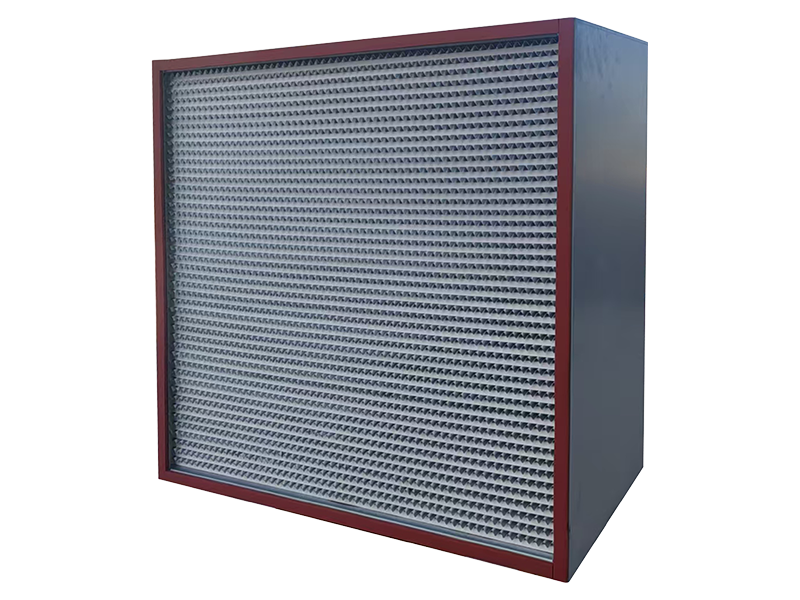
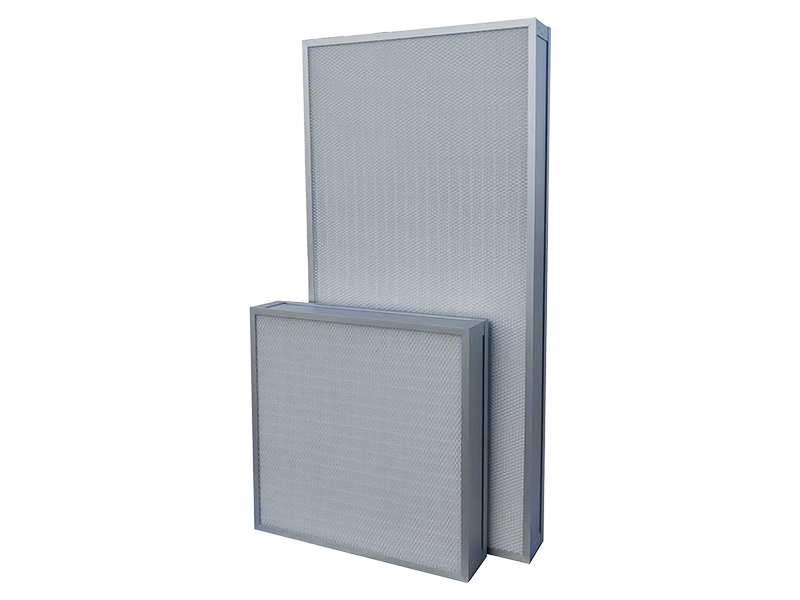
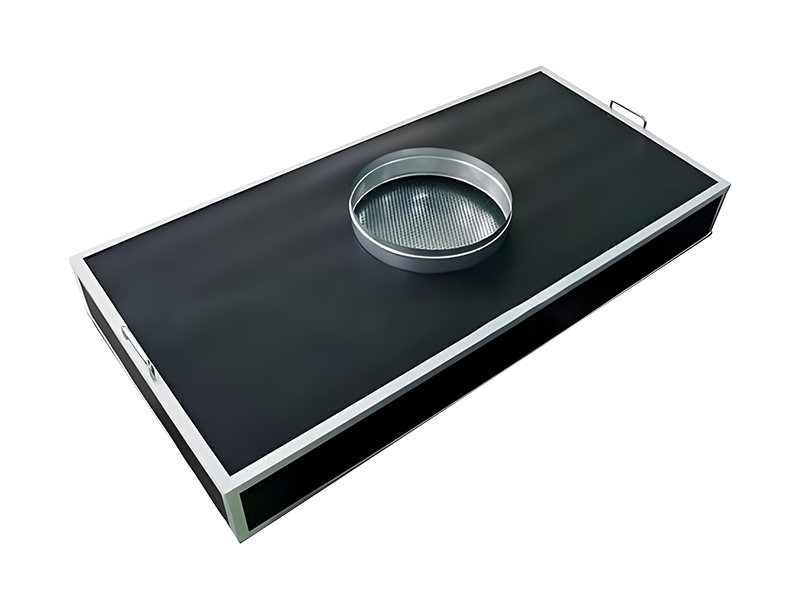
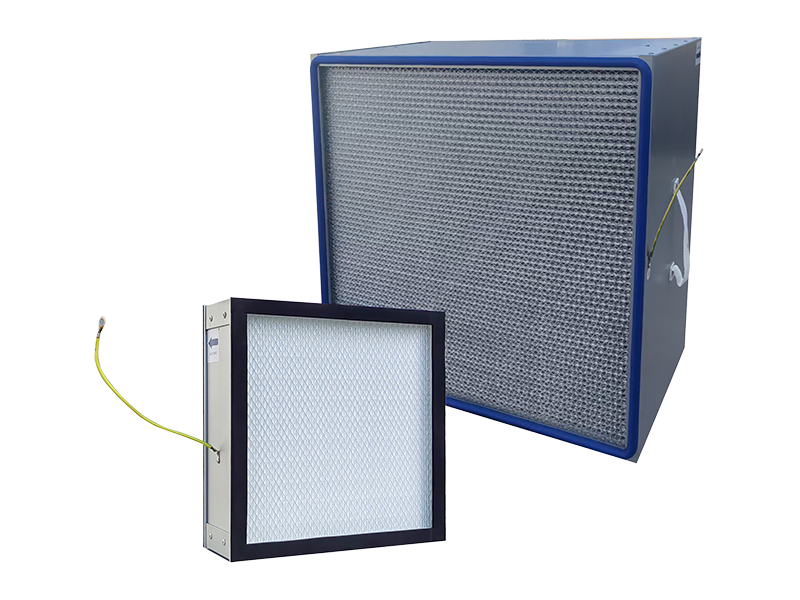
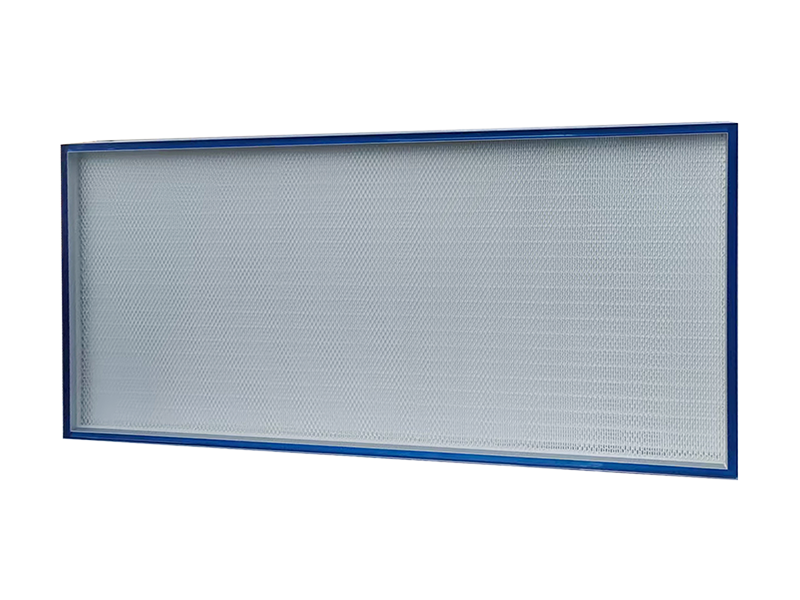
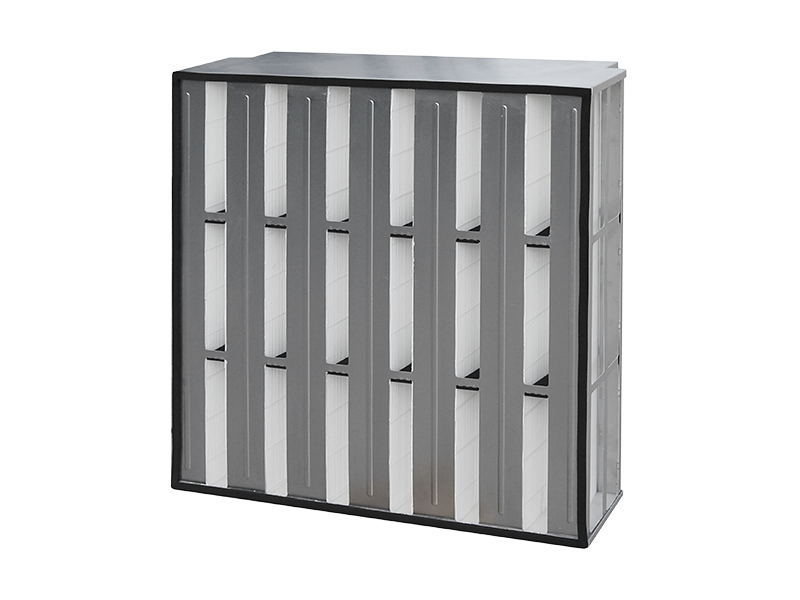
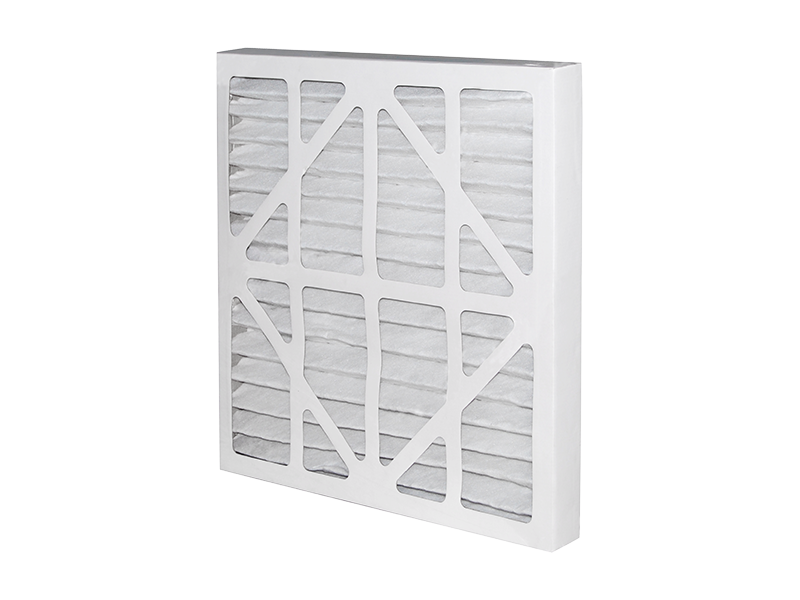
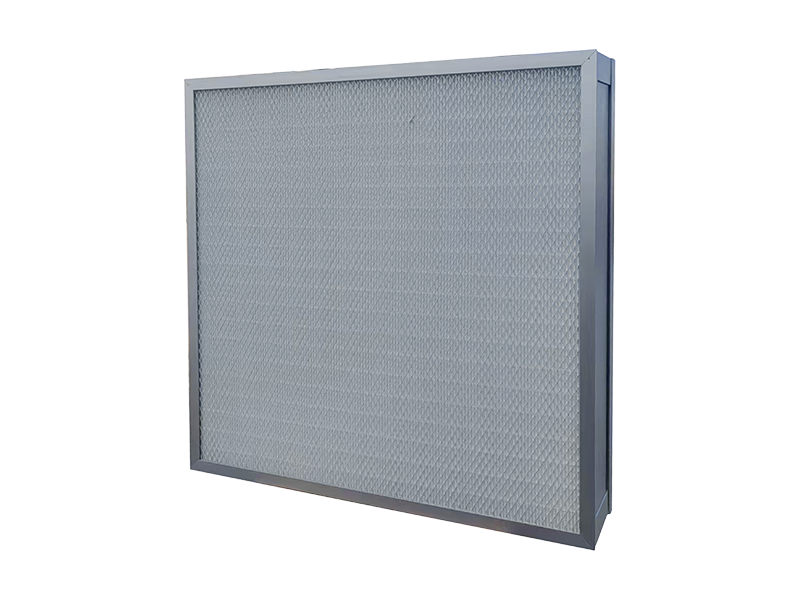
By product structure, HEPA filter products are classified into PTFE HEPA filters, gel-seal HEPA filters, V-bank filters, anti-static filters, high-temperature resistant separators filters, separator filters and separator-free filters.
Core Technical Advantages:
Ultra-high filtration efficiency: H14 grade filters offer ≥99.995% efficiency against 0.3 μm particles and pass the standard for Most Penetrating Particle Size (MPPS), satisfying the requirements of ISO Class 5 cleanrooms and Grade A sterile zones.
High-strength filter media: The filter medium features longitudinal tensile strength ≥0.7 kN/m and transverse tensile strength ≥0.5 kN/m, ensuring no deformation or rupture of filter paper under rated airflow.
Triple sealing design: 5mm EPDM foam sealing strip + solvent-free polyurethane sealant + mechanical/gel sealing. All units undergo PAO leak testing before delivery to eliminate bypass leakage.
Low pressure drop: The initial resistance of H13 grade filters is ≤220Pa, 5%–8% lower than similar industry products with remarkable energy-saving effects.
Working Condition Matching Table:
| Application Site | Cleanliness Class | Recommended Grade | Sealing Type | Remarks |
| Hospital Class I Operating Room (Orthopedics/Transplant) | ISO Class 5 (Class 100) | H14 | Gel Seal | Matched with ceiling air diffuser |
| Pharmaceutical Aseptic Filling Zone (Grade A) | ISO Class 5 | H14 | Mechanical Seal + PAO Test | Comply with GMP requirements |
| Semiconductor Fab (Lithography/Etching) | ISO Class 4–5 | H13/H14 | Separator-free + Chemical Media | AMC control required |
| Biosafety Laboratory (BSL-3/4) | ISO Class 5–6 | H14 | Gel Seal + In-situ Disinfection | High sealing standard |
| Hospital ICU/CCU | ISO Class 7 | H13 | Mechanical Seal | Cost-effective solution |
| Food/Cosmetic Quality Inspection Lab | ISO Class 6–7 | H13 | Mechanical Seal | — |
Application Fields:
Terminal filtration for Class 100 and higher high-end cleanrooms (compatible with HEPA/ULPA filters)
Core filtration for GMP-certified sterile pharmaceutical workshops and biosafety laboratories
Precision terminal purification for semiconductor, chip and microelectronics manufacturing workshops
Special filtration for medical operating rooms, sterile wards and laboratories
Terminal purification for precision instruments, optical equipment and lithium battery production workshops
Customized terminal purification filtration solutions
Case & Data Verification:
H14 HEPA filters with customized dimension of 650×1260×80mm and rated wind speed of 0.45m/s were adopted as terminal filters in an ultra-clean laboratory of a university. The measured initial resistance was 178Pa with air leakage rate ≤0.1%. Third-party testing verified the cleanliness reached Class 1000 (≤100 particles ≥0.5μm per cubic foot), meeting experimental requirements for nanomaterial synthesis.
FAQ:
Q1: How to choose between H13 and H14 HEPA filters?
A: H13 (99.95% efficiency) satisfies most ISO Class 5–6 cleanrooms and Grade B pharmaceutical workshops; H14 (99.995% efficiency) is applied to stricter scenarios including ISO Class 4–5 environments, Grade A sterile zones and Class I operating rooms. H14 filters cost 20%–30% more than H13 models.
Q2: What are the differences between separator and separator-free HEPA filters?
A: Separator filters use aluminum foil/paper separators with high mechanical strength, suitable for high wind speed (≥0.5m/s), yet heavier and slightly higher in pressure drop. Separator-free filters adopt hot-melt glue spacers with light weight and low resistance, ideal for space-limited applications such as FFUs.
Q3: What is the replacement cycle of HEPA filters?
A: Replace filters when the final resistance doubles the initial resistance (approx. 500Pa for H13) or leak testing fails. In cleanroom environments, H13 filters are generally replaced every 2–3 years and H14 every 3–5 years. Service life can be extended with front-end medium-efficiency / Sub-HEPA pre-filters.
Q4: Are HEPA filters effective against AMC (Airborne Molecular Contaminants)?
A: Standard HEPA filters only remove particulate matter and cannot eliminate AMC. Additional chemical filters (activated carbon/impregnated media) are required for semiconductor and pharmaceutical industries.